
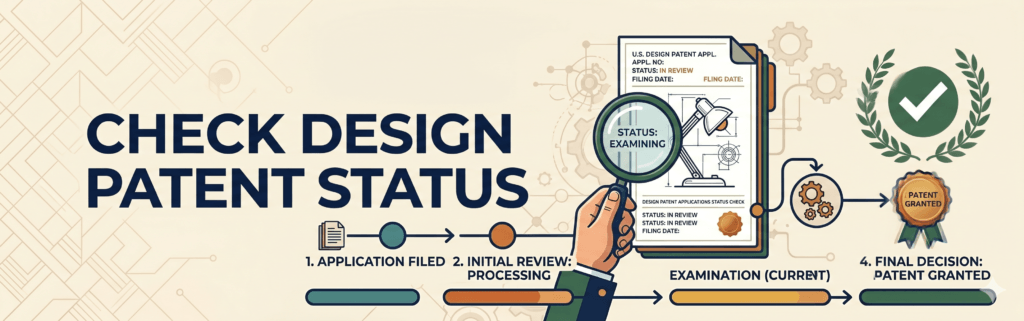
Tracking your design patent application status is essential to ensure your application progresses smoothly and no deadlines are missed. In India, design registrations are relatively fast, typically completed within 6–12 months if no objections arise.
With over 43,000 design applications filed in FY 2024–25, monitoring your application has become increasingly important due to higher examination volumes.
At Legismith LLP, we often observe that applicants lose valuable time simply because they are unaware of their application status or required actions. This guide explains how you can check your design application status and understand what it means.
Design Registration in India
Design registration in India is governed by the Designs Act, 2000, which protects the visual appearance of a product, including its shape, pattern, configuration, or ornamentation.
If you want to explore our industrial design service, you can check it here.
A registered design grants you exclusive rights, which means you can legally prevent others from copying or using the visual appearance of your product without permission.
Locarno Classification for Industrial Design
Before filing a design application, your product is categorised under the Locarno Classification, an international classification system managed by the World Intellectual Property Organization.
Purpose of Locarno Classification
The Locarno Classification helps standardise the categorisation of designs across different countries, ensuring consistency in how design applications are examined. It simplifies global searches and enables examiners to assess applications efficiently by placing them in the correct category.
You can explore the classification system here.
Design Patent Application Process
Understanding the process helps you interpret your application status correctly and take timely action when required.
1. Filing of Application
At this stage, you submit your design application along with the required drawings, representations, and applicant details. Once submitted, the Indian Patent Office issues an application number, which becomes essential for tracking the application status.
2. Formal Examination
After filing, the application undergoes a formal examination where the Controller verifies whether all documents are complete and comply with legal and procedural requirements under the Designs Act.
3. Examination Report (FER)
If any discrepancies or objections are identified during examination, a First Examination Report (FER) is issued. You are required to respond to these objections within a prescribed period of 6 months, failing which the application may not proceed further.
4. Publication
Once the application satisfies all requirements, it is published in the Design Journal. This publication makes the design available in the public domain for awareness and record purposes.
5. Registration & Certification
After successful examination and acceptance, the design is officially registered. A registration certificate is then issued, granting you legal ownership and exclusive rights over the design.
6. Renewal
The design protection remains valid for an initial period of 10 years, and you can extend this protection further by filing a renewal application within the prescribed time.
Design Registration Cost
Government Fee Structure
The cost of design registration in India depends on the category of the applicant, such as whether you are an individual, startup, or corporate entity, as well as the official fee structure prescribed by the government.
Additional Cost Considerations
While the official fees are generally reasonable, delays in responding to examination reports or missing deadlines can increase the overall cost due to additional compliance requirements and possible restoration procedures.
You can explore a broader cost structure here.
Benefits of Design Registration
Exclusive Rights
Design registration provides you with exclusive rights over the visual appearance of your product, ensuring that no other party can legally copy or use your design without your consent.
Protection Against Piracy
It offers protection against design piracy, which is particularly important in industries where the aesthetic appeal of a product plays a significant role in consumer purchasing decisions.
Enhanced Brand Value
A registered design enhances your brand value by making your product visually distinctive and recognisable in the marketplace.
Competitive Advantage
By protecting your design, you gain a competitive advantage, as competitors cannot replicate your product’s appearance.
Legal Remedies
In case of infringement, you gain access to legal remedies such as injunctions and damages, allowing you to enforce your rights effectively.
Monitoring your design patent application status ensures that you can secure and maintain these benefits without disruption.
Steps to Check Indian Design Patent Application Status
You can check your application status online through the official portal of the Indian Patent Office.
Step 1: Visit the IP India Portal
To begin, you need to visit the official IP India portal using the link.
Step 2: Select Design Application Status
Once you are on the portal, you should select the “Design Application Status” option available on the page to proceed with the search.
Step 3: Enter Application Number
You will be required to enter your application number. It is important to ensure that the application number includes the correct suffix, such as “-001”, as the system may not display results without it.
Step 4: Complete Captcha Verification
Next, you must complete the captcha verification process to confirm that the request is valid and not automated.
Step 5: View Application Status
After entering all required details correctly, you can click on the “Search” button to view your application status. The system will then display detailed information, including applicant details, current status, and examination updates.
Important Note:
Only applications filed after 01/04/2009 are available for online status tracking.
Checking Status Internationally
United States (USPTO)
You can track the status of design applications in the United States through the portal of the United States Patent and Trademark Office.
Recent USPTO Updates
Recent developments in 2026 include updated guidance related to design applications for computer-generated interfaces and icons, reflecting the evolving nature of design protection in digital environments.
WIPO (International Designs)
You can monitor international design filings through systems provided by the World Intellectual Property Organization.
Different Design Status Types and Their Meaning
Filed
This status indicates that your application has been successfully submitted and officially recorded by the Patent Office.
Under Process / Examination
This status means that the application is currently under review by the Controller, who is assessing its compliance and originality.
FER Generated
This indicates that objections have been raised in the First Examination Report, and you must respond within the prescribed timeline to continue the application process.
Amended Case
This status shows that you have submitted modifications or clarifications in response to the objections raised during examination.
Accepted
This status confirms that your design has been approved by the Controller after successful examination.
Accepted – Certificate Pending
This indicates that the application has been accepted, but the registration certificate has not yet been issued.
Registered / Certificate Generated
This confirms that your design has been officially registered and is now protected under law.
Published
This status means that your design has been published in the Design Journal and is available for public record.
Abandoned / Withdrawn
These statuses indicate that the application is no longer active, either due to missed deadlines or voluntary withdrawal by the applicant.
Design Objections and How to Overcome Them
Common Reasons for Objections
Objections are often raised due to issues such as lack of novelty, similarity with existing designs, incomplete documentation, or incorrect classification under the Locarno system.
How to Respond to Objections
To overcome these objections, you should carefully review the First Examination Report, identify the issues raised, and make necessary amendments to your application, including design drawings or descriptions.
Importance of Timely Response
It is important to submit your response within the prescribed timeline, as failure to do so may result in abandonment of the application.
At Legismith LLP, we ensure that responses are structured, timely, and aligned with statutory requirements to minimise the risk of delays or rejection.
FAQs
1. Does a design application provide protection before registration?
A design application does not grant enforceable rights until it is officially registered, although certain legal remedies may arise after publication.
2. What if my application status shows “Application does not exist”?
This usually happens due to incorrect application number entry, missing suffix, or if the application was filed before 2009 and is not available online.
3. How long does design registration take in India?
In most cases, design registration is completed within 6–12 months, depending on objections and processing timelines.
4. What happens if I do not respond to objections?
Failure to respond within the prescribed time may result in the application being marked as abandoned.
5. Can I track status without an application number?
In general, tracking requires the application number, as it is the primary identifier used by the system.
Final Thoughts
Checking your design patent application status is not just a procedural requirement but a critical step in protecting your intellectual property rights effectively. By regularly monitoring your application, you can stay informed about its progress, respond promptly to objections, and avoid unnecessary delays.
If you are currently tracking your application, have you reviewed whether your latest status requires any action from your side?
Protect Your Product's Design.
Stop copycats. File your design patent quickly and affordably. Secure the aesthetic identity that defines your brand’s authority.
Disclaimer
The content provided in this article is for general informational purposes only and does not constitute legal advice. Please consult with a qualified IP attorney for your specific needs.